
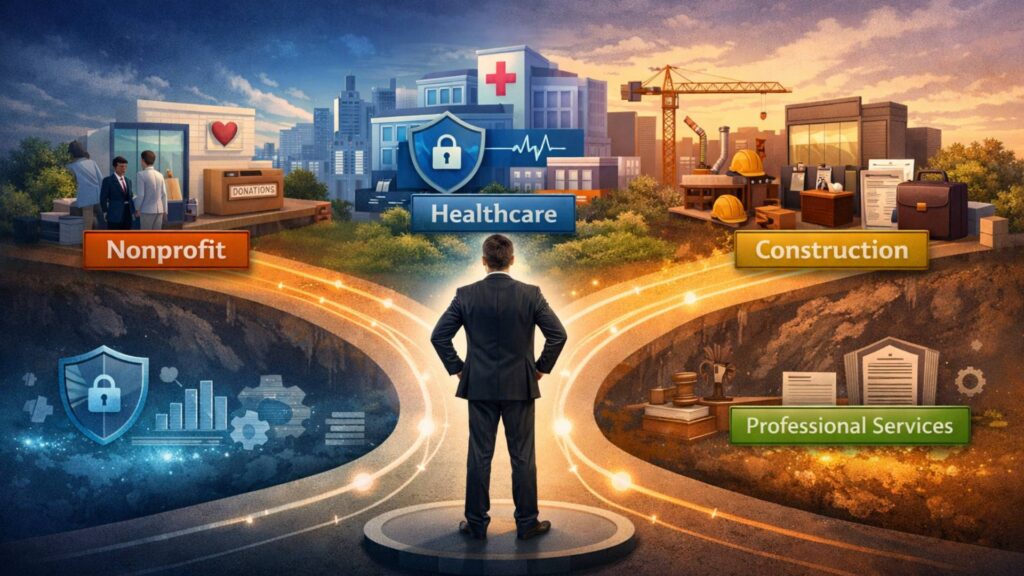
Cybersecurity leadership looks different today than it did even a few years ago. As threats become more sophisticated and regulations become more complex, organizations can no longer rely solely on technology to protect themselves. They need strategy, accountability, and leadership. That is where a vCISO (Virtual Chief Information Security Officer) comes in.
At its core, the role of a vCISO is consistent across every organization: protect the business, manage risk, and align security with operations. The change is in how those responsibilities are carried out. Risk is not the same across industries. Operations are not structured the same way. Compliance obligations vary. Reputational impact looks different depending on who you serve.
When cybersecurity leadership ignores these differences, security programs become disconnected from reality. Policies exist, but they don’t fit the way people work. Tools are purchased, but risks remain unaddressed. Strategy becomes theoretical instead of practical.
A vCISO succeeds by understanding that industry context defines how security must operate.
The Core Responsibility of a vCISO
Regardless of the organization, a vCISO is responsible for four fundamental outcomes:
- Protecting the organization
This includes safeguarding data, systems, operations, and reputation from internal and external threats. - Managing and prioritizing risk
Not all risks carry the same impact. A vCISO evaluates what matters most to the business and focuses resources accordingly. - Aligning security with business operations
Security must support how the organization works, not disrupt it. A vCISO ensures protection is built into daily processes. - Providing leadership, governance, and accountability
Security programs fail when ownership is unclear. A vCISO establishes direction, sets expectations, and maintains accountability at the leadership level.
These responsibilities never change. The environment they are applied to does.
Why Risk Looks Different by Industry
Risk is not a fixed concept. It is defined by what an organization depends on to operate, who it serves, and what happens when something goes wrong. Every industry has its own definition of “critical,” and that directly shapes how cybersecurity leadership must operate.
Data Sensitivity Varies
The type of data an organization protects determines both the severity of a breach and the response required. In healthcare, patient records carry legal, ethical, and life-impacting consequences. In professional services, client data is tied to contracts, legal exposure, and long-term trust. Nonprofits depend on donor information and giving history to sustain their mission. Construction companies rely on project plans, vendor details, and operational systems to keep work moving. A vCISO must understand not just what data exists, but what that data represents to the business.
Downtime Impact Varies
The cost of disruption is measured differently across industries. In healthcare, system downtime can delay care, affect patient outcomes, and expose the organization to regulatory risks. In construction, outages halt projects, delay timelines, and increase costs. For nonprofits, downtime interrupts fundraising, communications, and community support. In professional services, even short disruptions can affect client confidence and contractual obligations. A vCISO evaluates resilience and recovery planning based on how quickly the organization must return to normal operations.
Compliance Pressure Varies
Some industries operate under strict regulatory frameworks that define how data must be protected, monitored, and reported. Others face contractual, grant, or insurance-driven requirements that still carry significant consequences. Healthcare must maintain continuous compliance readiness. Nonprofits must demonstrate stewardship and accountability. Professional services must uphold contractual and privacy obligations. Construction must meet the client’s and vendor’s security expectations. A vCISO ensures compliance is proactive, organized, and aligned with the organization’s fundamental obligations.
Reputational Damage Varies
Reputation is impacted differently depending on who the organization serves. In professional services, trust is the business model; a breach can threaten client relationships immediately. In healthcare, reputation is tied to patient safety and care quality. In nonprofits, donor confidence determines sustainability. In construction, reliability and operational stability affect future contracts. A vCISO measures risk not just by technical exposure, but by how trust is earned and maintained.
Together, these differences define urgency, scope, leadership involvement, and decision-making. Cybersecurity leadership cannot be uniform because business risk is not uniform. A vCISO adapts strategy, governance, and priorities to match how each organization operates, serves its stakeholders, and sustains its future.
Industry Deep Dives
Each sector faces its own set of challenges and risk factors, making the vCISO’s leadership approach both unique and essential. The strategies that work in one industry may not be effective in another, which is why a tailored approach is critical to success.
Nonprofit
Industry Risk Profile
Nonprofits rely on trust. Donor information, funding records, and grant data must remain protected. A breach can directly affect credibility, funding, and long-term sustainability. Budgets are often limited, and security teams are typically small or nonexistent.
Operational Challenges
- Shared access among staff and volunteers
- Limited technical resources
- Dependence on third-party platforms for donations and communication
- High accountability to boards and funders
How a vCISO Adapts
- Focuses on governance and accountability at the board level
- Prioritizes donor data protection and access controls
- Builds security programs that balance protection with affordability
- Emphasizes policy clarity and training for non-technical users
- Establishes audit readiness and grant compliance practices
Healthcare
Industry Risk Profile
Healthcare organizations protect some of the most sensitive data that exists. Patient safety, system availability, and regulatory compliance are inseparable from cybersecurity.
Operational Challenges
- Clinical environments that cannot tolerate downtime
- Multiple systems supporting patient care
- Strict regulatory obligations (HIPAA and others)
- Separation between clinical and administrative workflows
How a vCISO Adapts
- Prioritizes system reliability and incident response readiness
- Aligns cybersecurity strategy with patient safety requirements
- Builds compliance frameworks that hold up under audits
- Design policies that work in fast-paced clinical environments
- Establishes clear leadership roles for breach response and communication
Construction
Industry Risk Profile
Construction organizations depend on project continuity. Disruptions impact timelines, budgets, and client relationships. Vendor and subcontractor access creates significant exposure.
Operational Challenges
- Field-based teams with mobile access
- Constant onboarding and offboarding of vendors
- Jobsite technology that varies by project
- Separation between office and field operations
How a vCISO Adapts
- Focuses on vendor risk management and access control
- Design security policies that fit mobile and jobsite workflows
- Prioritizes continuity planning and system availability
- Bridges gaps between office systems and field operations
- Creates reporting that aligns security with project risk
Professional Services
Industry Risk Profile
Trust is the product. Client confidentiality, contractual obligations, and regulatory exposure define the organization’s risk profile.
Operational Challenges
- High volumes of sensitive client data
- Legal and contractual exposure
- Distributed teams and external collaboration
- Reputation-driven business growth
How a vCISO Adapts
- Builds strong data governance frameworks
- Focuses on confidentiality, access control, and client assurance
- Aligns security reporting with legal and compliance needs
- Establishes incident processes that protect reputation
- Ensures vendor and partner security standards are enforced
Why a One-Size-Fits-All Security Strategy Fails
Security programs fail when they assume every organization works the same way. Templates do not account for operational complexity. Policies that look good on paper break down when they don’t match how teams actually operate.
When security ignores business context:
- Risk becomes theoretical
- Accountability becomes unclear
- Compliance becomes reactive
- Leadership becomes disengaged
A vCISO adapts strategy to the business model. That adaptability is what makes the role effective.
What Strong Security Leadership Looks Like Across Industries
Regardless of industry, strong cybersecurity leadership shares common traits:
- Clear ownership: One role is responsible for direction and accountability.
- Business-aligned risk prioritization: Decisions are tied to operational impact, not fear or trends.
- Practical policies: Security rules that reflect how work actually happens.
- Real incident preparedness: Defined response plans, roles, and communication strategies.
- Executive-level reporting: Security performance translated into business language.
vCISO Tailored Toward Industry
A vCISO has one responsibility and many realities. The role does not change. The environment does.
Risk is different in every industry. Operations shape security outcomes. Compliance pressures vary. Reputational impact carries other consequences. Cybersecurity leadership succeeds only when it reflects these truths.
Strong security starts with understanding how a business truly operates and designing protection that supports it.